








Leskovac Gets New School
03 April 2012, LeskovacSuccessful completion of the first of the twenty-five local infrastructure projects supported through EU PROGRES
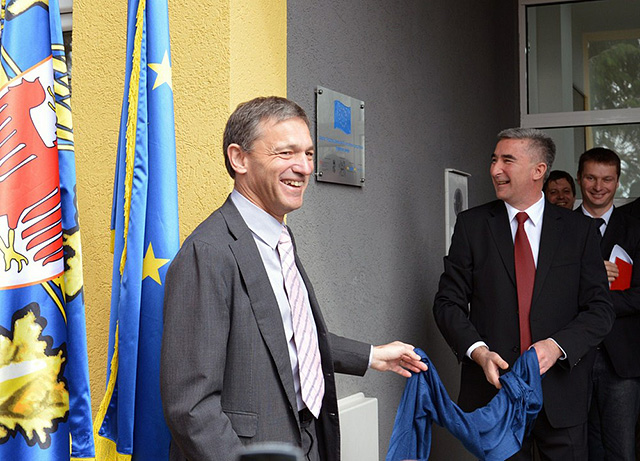
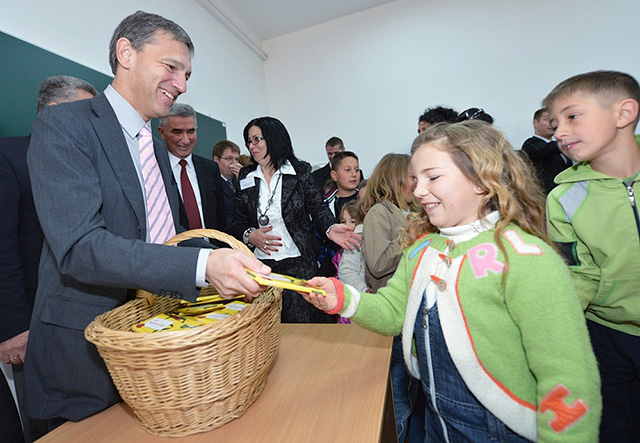
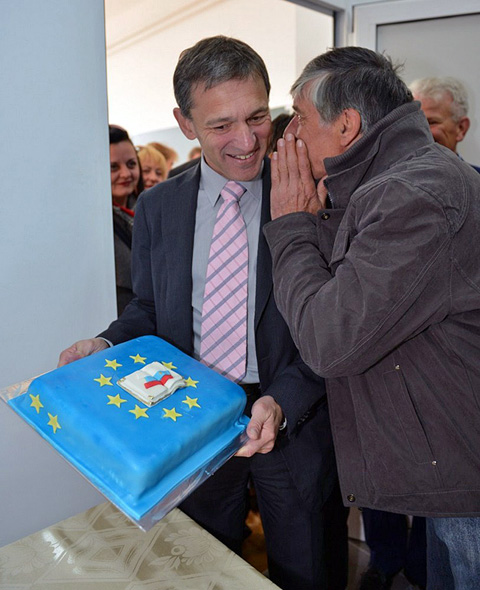
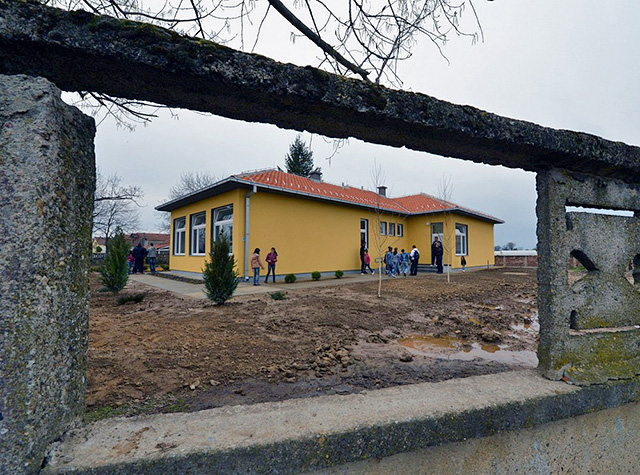
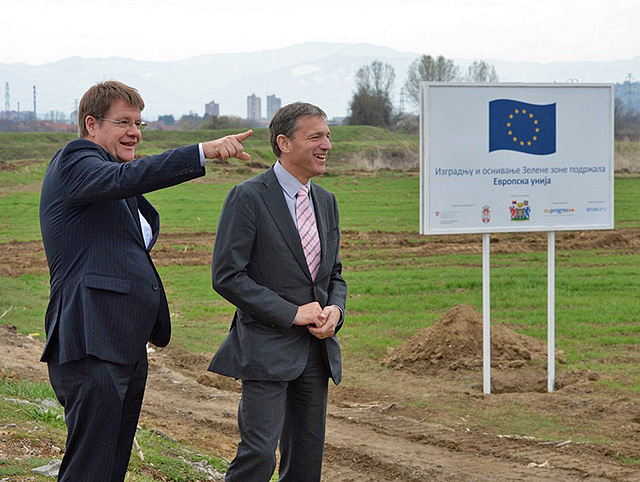
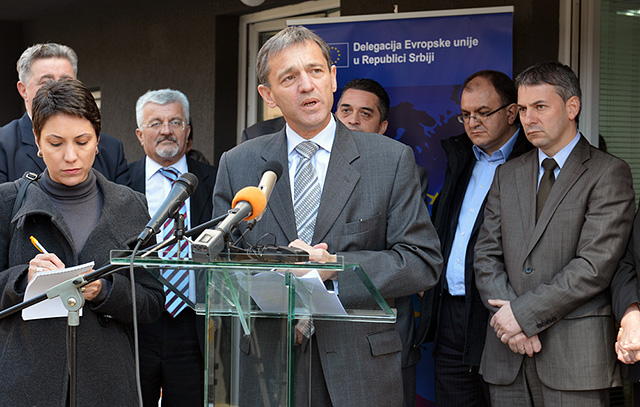
Head of the EU Delegation to Serbia Ambassador Vincent Degert and Leskovac Mayor Slobodan Kocić today opened a new primary school in the village of Kumarevo at Leskovac in the presence of around one hundred villagers.
Thanking the residents of Kumarevo for their warm hospitality, Ambassador Degert said: “The construction of this school is very important, above all for the children who will attend class in better conditions. And, since the future rests on the youth, this is also a pledge for a better life of the community. The European Union is currently supporting over seven hundred projects across Serbia, which are to improve the conditions for education, infrastructure, and contribute to economic development and opening of new jobs.”
The European Union and the Government of Switzerland allocated 100,000 EUR for the construction of the school via the European Partnership with Municipalities Programme – EU PROGRES, while Leskovac supported the project with an additional 50,000 EUR. The building that housed the school in the past was over 40 years old and absolutely inadequate. Fifty pupils from grade one to grade four and around 15 pre-schoolers will be attending class in the new school building.
An agro-information centre will be established in one part of the school building. The extremely successful Kumarevo farmers will thus have the opportunity to follow the latest trends in agricultural production.
The new school building was completed within the contractual period, in less than a year, and the children who are now attending nearby schools will be able to return to their village. This is the first of the twenty five local infrastructure projects implemented thanks to support through EU PROGRES that has been completed.
Mayor Kocić congratulated the residents of Kumarevo on their new school and said that they now had “probably the most beautiful school in the city jurisdiction”.
Ambassador Degert today signed a contract for the construction of a waste water treatment facility in the presence of Serbian Prime Minister Mirko Cvetković and other senior state officials. The European Union will support the project with a nine million EUR grant through the European Union's Municipal Infrastructure Support Programme – MISP IPA 2010. Director of the Serbian EU Integration Office Ms. Milica Delević and Ambassador of the Kingdom of The Netherlands Laurent Stokvis on this occasion signed a contract for a 7.9 million EUR Dutch donation for the same project. The overall value of the waste water treatment plant in Leskovac is 24 million EUR and the additional funding will be provided from the Serbian budget and the budget of the City of Leskovac.
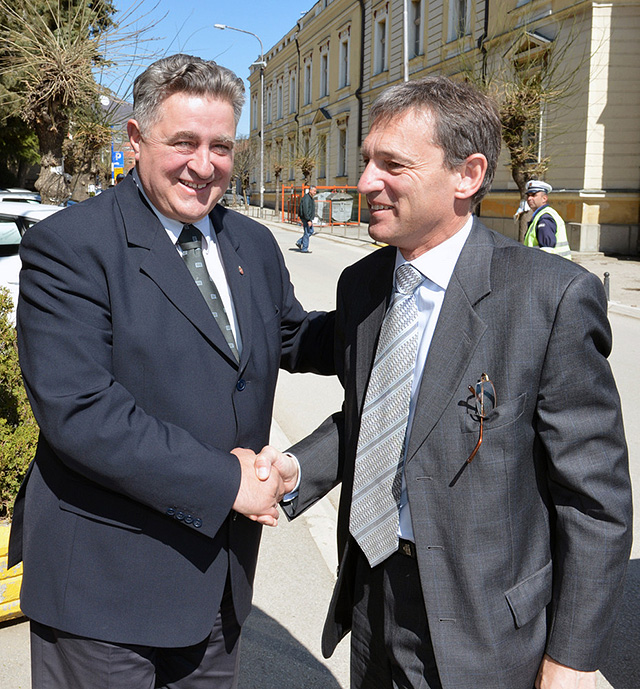
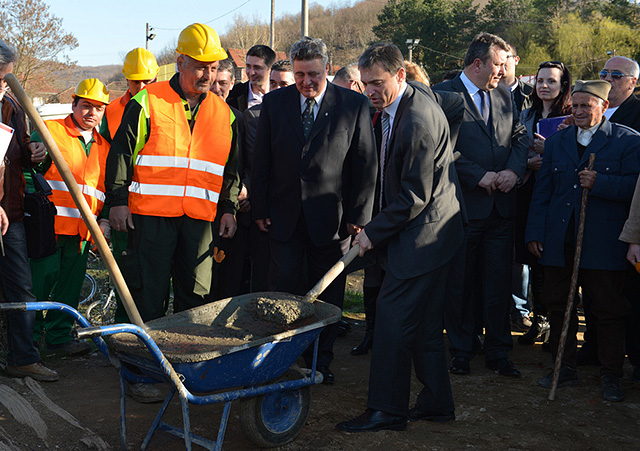
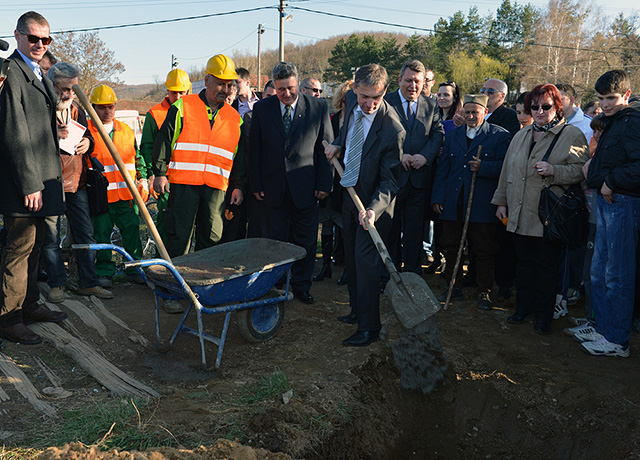
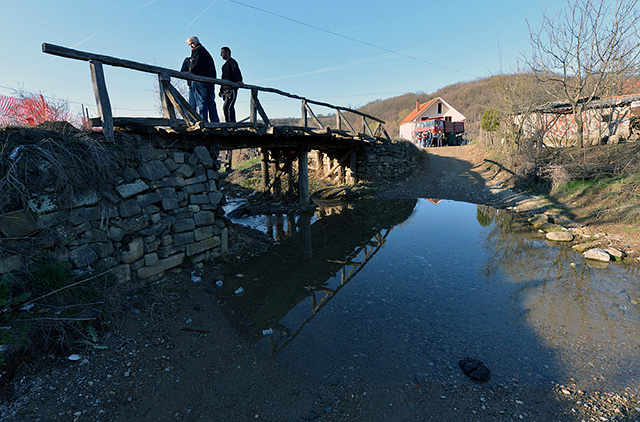
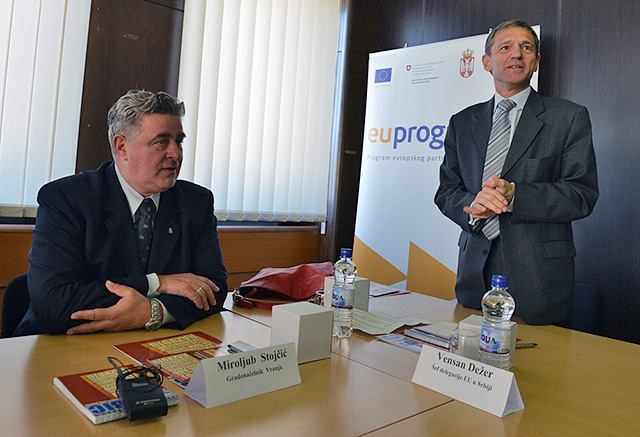
During his visit to Vranje yesterday, Ambassador Degert and Mayor Miroljub Stojčić inaugurated the works on the regional road bridge in the village of Tibužde. The European Union has set aside 72,000 EUR for the implementation of this local project, which will directly improve the living conditions of around 1,300 residents of Tibužde and the six nearby villages.
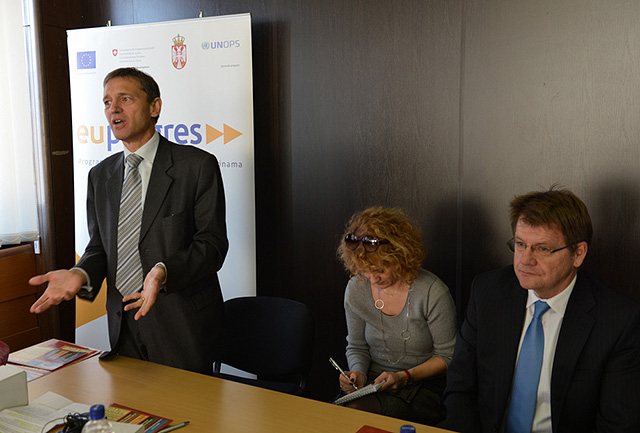
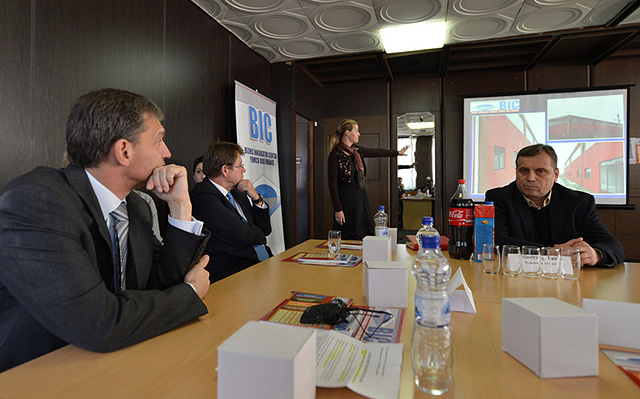
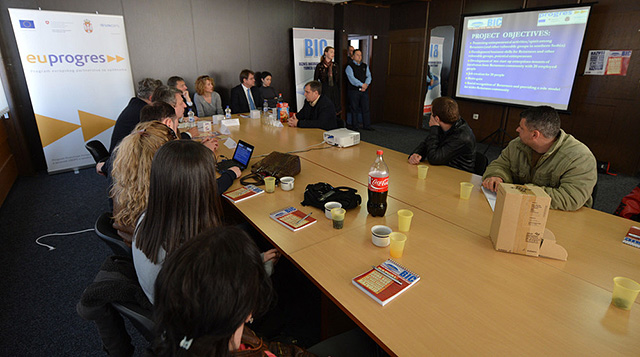
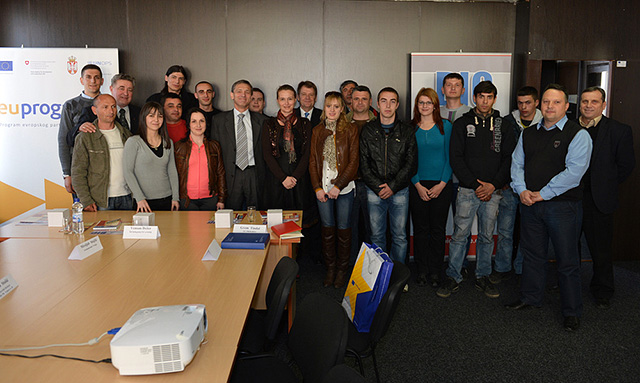
Whilst in Vranje, the Ambassador also met with the beneficiaries of the Business Incubator Centre which aims to advance the entrepreneurial skills of persons belonging to the vulnerable groups of the population, particularly returnees under Readmission Agreements. He encouraged the beneficiaries to make use of the opportunity to further their knowledge and successfully launch their own businesses. He also presented specific EU support programmes and alerted to the risks of abuses of the liberalisation of the visa regime.
Summing up his impressions after his two-day visit to Vranje and Leskovac, Ambassador Degert said the following: “The diversity of projects we are inaugurating and visiting show the depth of EU's involvement in supporting Serbian reforms and our commitment to helping Serbian population live a better life. Improving environmental protection, better conditions for schooling and living and enabling economic empowerment are some of the fundamental values on which the EU is based. The expectations of the Serbian population from the European integration process - now that Serbia is a candidate country for EU membership - will inevitably increase and with our support we want to show that the EU is a strong and helpful partner in this process that understands and addresses the needs“.

