



509.855 Euros for Local and Inter-Municipal Projects in South and South West Serbia
23 February 2012, LeskovacMembers of the Steering Committee of the European Partnership with Municipalities Programme – EU PROGRES endorsed funding of three infrastructure projects in municipalities of Toplica District, support for the regional fruit production in Pčinja District and development of technical documentation for transfer station in Sjenica, the total value being EUR 509,855. During the meeting the results achieved by EU PROGRES in the period October – December 2011 were presented, the previous examples of good practice and challenges the Programme is faced with were examined and the criteria for the second call for the Citizens Involvement Fund projects were approved.
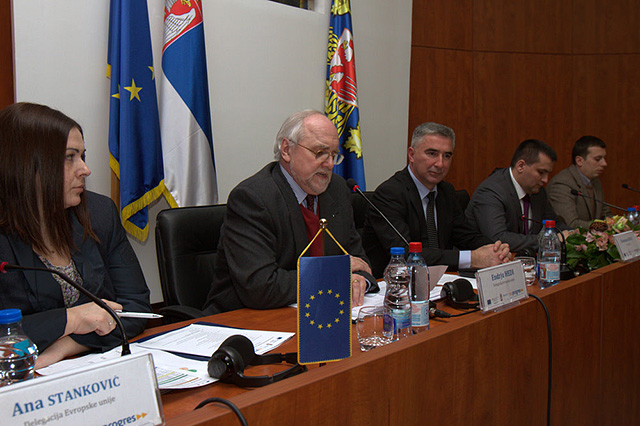
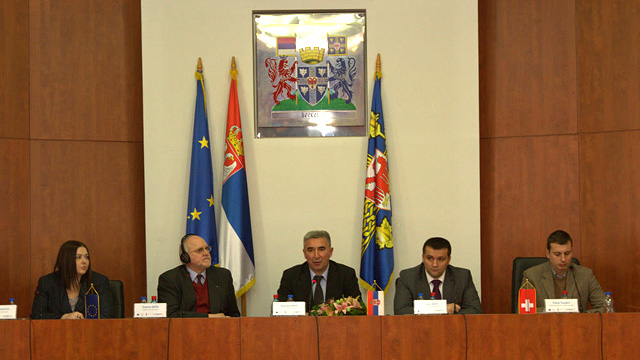
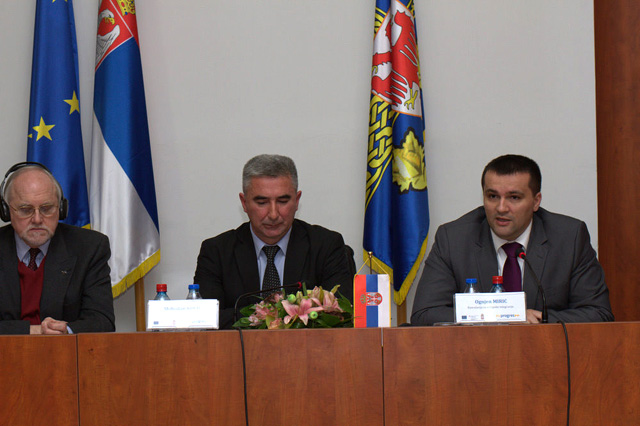
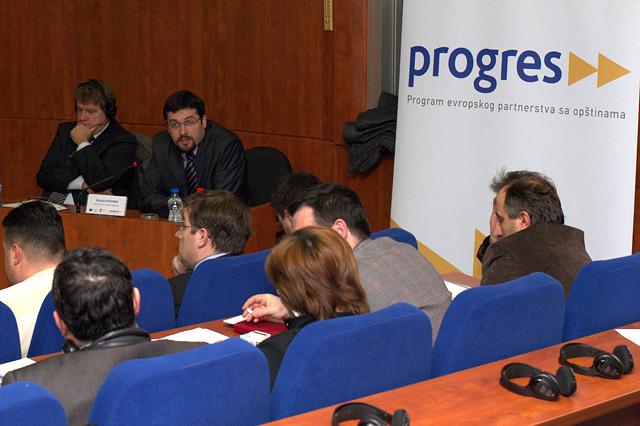
This sixth meeting presided by Mr Ognjen Mirić from the Serbian European Integration Office and hosted by Mr Slobodan Kocić, the Mayor of Leskovac, was attended by the representatives of line ministries, municipalities taking part in the realization of EU PROGRES, development agencies and projects, civil society and donors – European Union and Government of Switzerland.
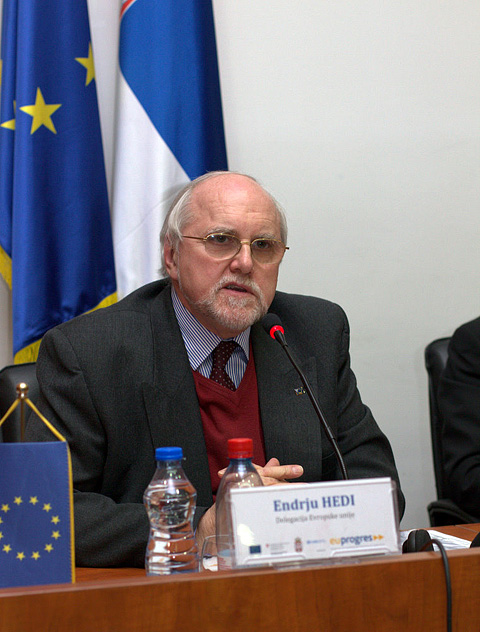
“European Union is the largest donor to the Republic of Serbia and it is always a pleasure for me to see on the spot how we helped improve the quality of life for the citizens in underdeveloped areas. However, 2012 will be exceptionally important for the success of EU PROGRES. This is the election year and the municipalities must not forget what they had committed to when signing the project agreements with EU PROGRES. Development planning should remain a priority and include all members of the community” said Mr Andrew Heady from the Delegation of the European Union.
Mr Petar Vasilev from the Swiss Agency for Development and Cooperation emphasized the importance of partnership while talking about the Citizens Involvement Fund criteria. “The participants are expected to go the extra mile in project preparation. We hope that formal partnership between municipalities and civil society organizations will be replaced by active engagement of both parties. That will also be considered an advantage for allocation of grants.”
By the end of December 2011, 109 grant contracts were signed within EU PROGRES for the implementation of projects through four program components: (1) good governance, (2) municipal management and planning, (3) infrastructure and (4) public awareness and branding. Out of that, 28 projects were already completed, 19 were realized according to the previously set plan, 57 were delayed, 3 cancelled and 2 critical. Main implementation problems are the lack of municipal co-funding, insufficient engagement by all stakeholders, non-compliance with the law, unauthorized changes in project design, delayed public procurement processes.
There was also talk at the meeting about the Instrument for Pre-Accession Assistance (IPA) programming for 2013 i.e. exchange of opinions on the concept of the new programme that could potentially succeed EU PROGRES. Mr Branko Budimir from the Serbian European Integration Office pointed out the identification of the need to work on further strengthening of local self-governments in planning and implementation of development activities. “Speaking about that, I refer to strengthening administrations for project management, improvement of services for the business sector, better promotion of investment potential, further improvement of infrastructure, increasing economic competitiveness, living conditions in rural areas and modernization of agricultural production, but also support for vulnerable groups and strengthening cooperation between the administrative bodies and the civil sector.”

